
Computational Fluid Dynamics
FTQC applications
Simulating complex fluid behavior to improve efficiency, safety, and cost
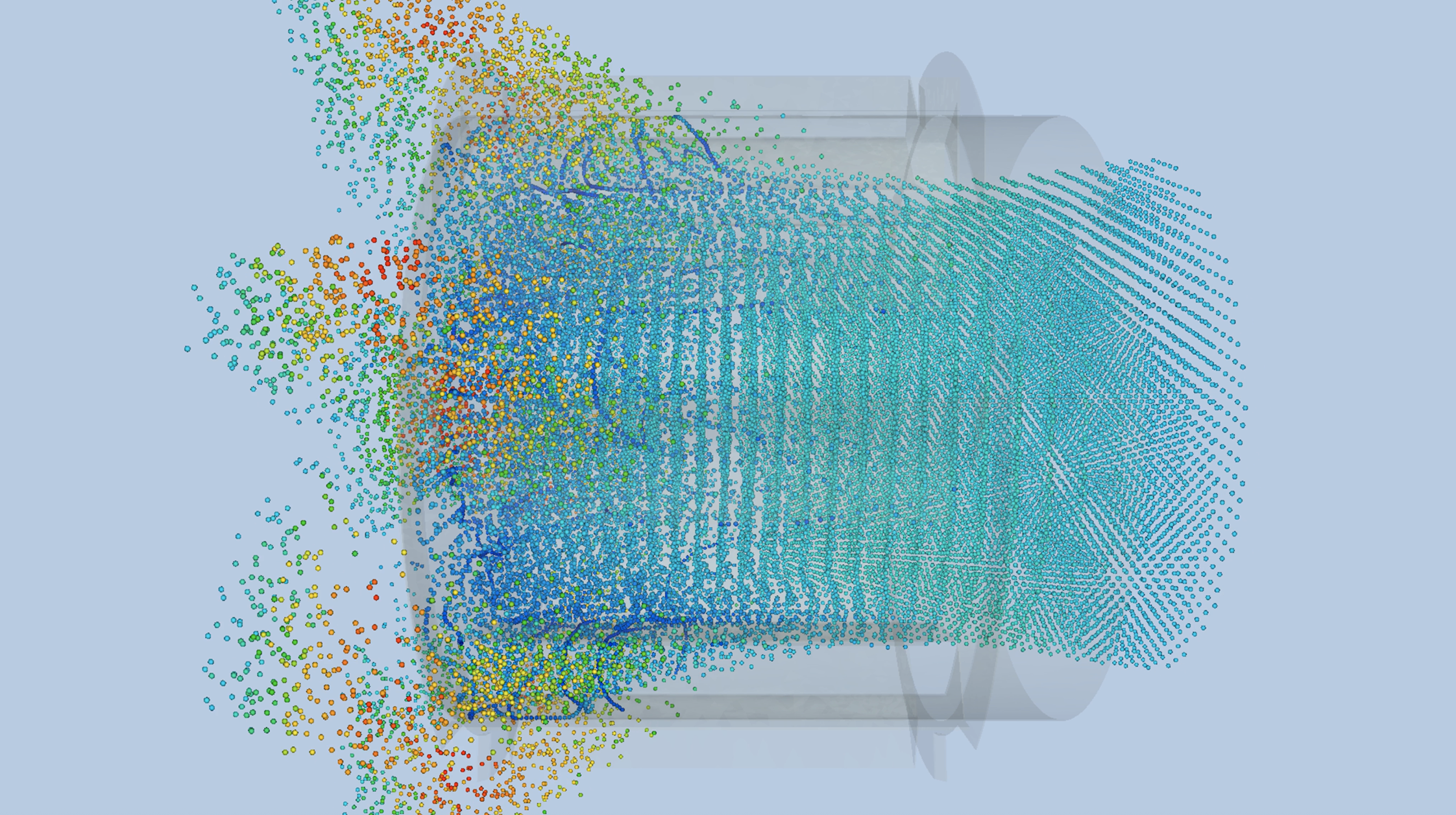
Computational fluid dynamics (CFD) uses numerical methods to simulate the flow of gases and liquids, considering factors like velocity, pressure, temperature, and density. It is widely applied in fields ranging from aerospace and automotive to oil and gas engineering for understanding fluid behavior to optimize performance.
An important limitation in current CFD simulations is the level of detail that can be captured by classical hardware. Highly turbulent flows, for example, require fine mesh resolutions to accurately capture the physics. However, even on the largest supercomputers such resolutions remain unattainable.
Once deployed, a fault-tolerant quantum computer could drastically improve the speed, scale, and accuracy of these critical simulations.
Potential FTQC applications
-
Simulate complex fluid-structure interactions, high-speed turbulence, aerodynamic heating, drag forces, and shockwave behavior to improve aircraft efficiency and safety.
-
Optimize wind farm layouts and simulate wave loading on offshore wind turbines and platforms to support more resilient energy systems.
-
Model blood flow and soft tissue interactions for applications such as stent and heart valve design, and simulate synovial fluid behavior in joint replacements to improve device performance and longevity.
Partnership spotlight

PsiQuantum is collaborating with Airbus, Europe’s largest aeronautics and space company, to advance applications in aerospace for fault-tolerant quantum computers. Together, the two companies are combining their expertise to develop and evaluate quantum algorithms for complex problems in fluid mechanics—illustrating the promise of fault-tolerant quantum computing for aerospace solutions.
Researchers from PsiQuantum and Airbus have developed the first end-to-end fault-tolerant quantum algorithm for non-linear CFD simulations of incompressible fluids based on the Carleman linearization approach and the lattice-Boltzmann method (LBM).
Read the papers here: